

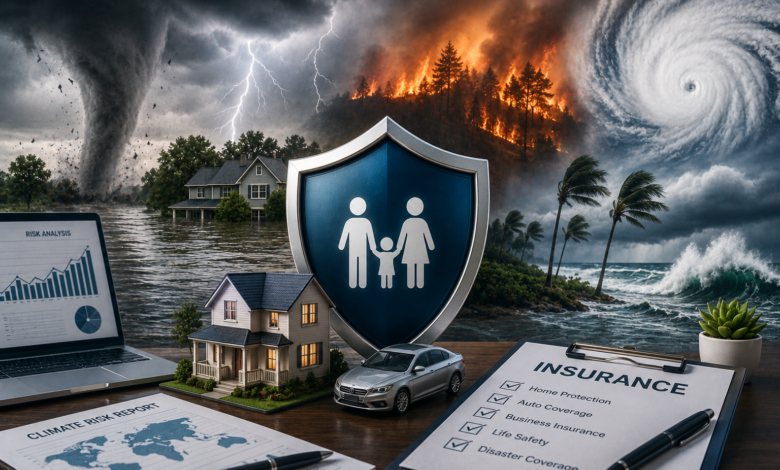
The Growing Impact of Climate Change on Insurance in 2026
The insurance industry has always been built around one idea: preparing for unexpected risks. However, in recent years, those risks have become harder to predict.
Across the globe, communities are experiencing stronger storms, longer heatwaves, devastating floods, and more frequent wildfires. These environmental changes are not only affecting people’s lives but are also transforming how insurance companies assess risk and provide coverage.
In 2026, climate change is no longer just an environmental issue—it has become a major financial challenge for insurers, businesses, and homeowners alike.
A New Era of Risk Management
For decades, insurance companies relied on historical weather records and past claims data to estimate future losses. This system worked reasonably well when weather patterns remained relatively stable.
Today, however, extreme weather events are occurring with greater frequency and intensity.
As a result, traditional forecasting methods are becoming less reliable, forcing insurers to adopt new strategies for managing risk.
The industry is now investing heavily in climate research, predictive technology, and advanced analytics to better understand future threats.
Why Insurance Companies Are Concerned
Every year, insurance providers pay billions of dollars to cover damage caused by natural disasters.
Some of the most costly events include:
- Flooding
- Tropical storms
- Wildfires
- Severe thunderstorms
- Coastal erosion
- Extreme heat events
When these disasters occur more often, insurers face higher claim volumes and larger financial losses.
To remain financially stable, companies must adjust their pricing models and coverage options.
Homeowners Are Seeing the Effects
One of the most noticeable impacts of climate change can be seen in the home insurance market.
Properties located in high-risk areas are becoming more expensive to insure.
In some regions, homeowners are experiencing:
- Premium increases
- Higher deductibles
- Reduced coverage availability
- Additional inspection requirements
Insurance companies are paying closer attention to location-based risks than ever before.
The Effect on Vehicle Insurance
Extreme weather not only damages homes and businesses. Vehicles are also vulnerable.
Heavy rainfall, flash floods, hailstorms, and falling debris continue to generate costly auto insurance claims.
As these weather-related incidents increase, insurers often adjust premiums to reflect the growing risk.
Drivers living in areas prone to severe weather may notice larger insurance increases than those in lower-risk regions.
Businesses Face New Challenges
Commercial insurance is also evolving as companies adapt to climate-related threats.
Businesses may face losses caused by:
- Property damage
- Supply chain interruptions
- Power outages
- Equipment failures
- Temporary closures
Many insurers now consider environmental exposure when evaluating business insurance applications.
Organizations that invest in risk-reduction measures may find it easier to obtain favorable coverage terms.
Technology Is Helping Insurers Adapt
Modern technology is playing a major role in helping insurance companies respond to climate-related risks.
Insurers are increasingly using:
- Artificial intelligence
- Satellite imagery
- Climate forecasting models
- Geographic information systems
- Predictive analytics
These tools provide valuable insights that help companies identify vulnerable areas and improve risk assessments.
Prevention Is Becoming a Priority
Insurance providers are shifting their focus from simply paying claims to helping customers reduce risk before disasters occur.
Examples include:
- Encouraging stronger building materials
- Promoting flood mitigation projects
- Supporting wildfire prevention efforts
- Providing safety recommendations
Preventive measures can reduce losses for both insurers and policyholders.
What Consumers Should Do
As climate-related risks continue to evolve, policyholders should take a proactive approach to protecting their assets.
Helpful steps include:
Review Insurance Coverage Annually
Coverage needs may change as environmental risks increase.
Understand Policy Limitations
Knowing what is and isn’t covered can prevent surprises during the claims process.
Protect Property Against Weather Risks
Investing in protective measures may reduce both damage and future insurance costs.
Keep Important Records Updated
Photos, receipts, and property documentation can simplify claim submissions.
The Future of Climate Risk Insurance
Experts believe climate risk will continue influencing insurance markets throughout the coming decade.
Future trends may include:
- More personalized pricing models
- Expanded use of environmental data
- New disaster-focused insurance products
- Greater emphasis on resilience planning
- Advanced climate risk monitoring systems
Insurance companies that adapt successfully will be better equipped to navigate future challenges.
Final Thoughts
Climate change is reshaping the insurance industry in ways that few predicted just a decade ago. Increasing natural disasters, rising claim costs, and shifting weather patterns are forcing insurers to rethink how they assess risk and serve customers.
For homeowners, drivers, and business owners, understanding these changes is becoming increasingly important. By reviewing coverage regularly and taking preventive measures, policyholders can better prepare for a future where climate-related risks play a larger role in financial planning.
As environmental conditions continue to evolve, climate awareness will likely become an essential part of every insurance decision.