

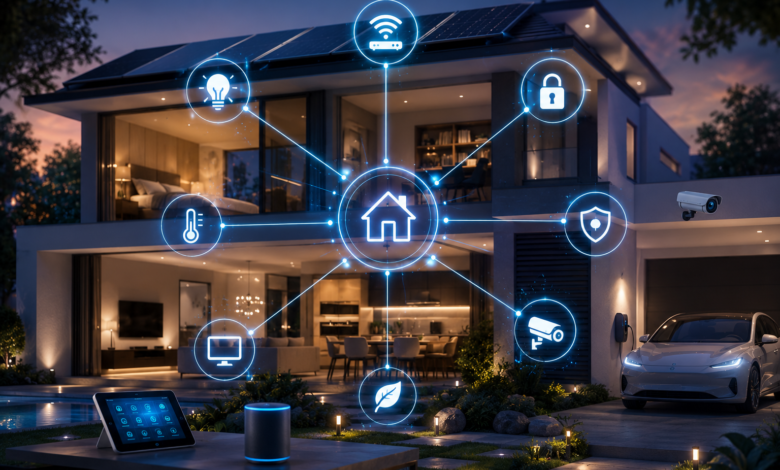
Smart Homes in 2026 | Top Technologies Making Homes More Intelligent
Smart homes are no longer a luxury reserved for technology enthusiasts. In 2026, smart home technology will be more affordable, intelligent, and accessible than ever before. Thanks to advancements in Artificial Intelligence (AI), the Internet of Things (IoT), and automation, homeowners can now enjoy greater convenience, security, and energy efficiency.
From voice-controlled assistants to AI-powered security systems, smart homes are transforming the way people live. In this guide, we’ll explore the top smart home technologies of 2026 and how they are shaping the future of modern living.
What Is Smart Home Technology?
Smart home technology refers to connected devices and systems that automate and control various household functions.
These technologies can manage:
- Lighting
- Security
- Heating and cooling
- Appliances
- Entertainment systems
- Energy consumption
Most smart devices can be controlled through mobile apps, voice assistants, or automated routines.
Why Smart Homes Are Growing in Popularity
Several factors are driving smart home adoption worldwide.
Increased Convenience
Smart devices automate everyday tasks and reduce manual effort.
Improved Security
Modern systems provide real-time monitoring and alerts.
Energy Savings
Smart homes help reduce electricity consumption and utility bills.
Better Home Management
AI-powered systems learn user preferences and automatically adjust settings.
AI-Powered Home Automation
Artificial Intelligence is becoming the brain of modern smart homes.
Learning User Behavior
AI systems can learn routines such as:
- Preferred room temperatures
- Lighting preferences
- Sleep schedules
- Appliance usage patterns
Automated Decision-Making
Instead of waiting for commands, AI can automatically:
- Turn off unused lights
- Adjust thermostats
- Optimize energy consumption
- Monitor security activity
Smart Security Systems
Home security is one of the fastest-growing smart home categories.
AI Security Cameras
Modern cameras can recognize:
- Family members
- Visitors
- Vehicles
- Suspicious activity
Smart Doorbells
Video doorbells allow homeowners to see and communicate with visitors remotely.
Smart Locks
Digital locks provide:
- Remote access control
- Temporary guest access
- Real-time notifications
Motion Detection Systems
Advanced sensors monitor unusual movement and send instant alerts.
Smart Lighting Solutions
Lighting technology continues to evolve rapidly.
Voice-Controlled Lighting
Users can control lights through voice assistants.
Automated Scheduling
Lights can automatically adjust based on:
- Time of day
- Occupancy
- Weather conditions
Energy Efficiency
LED smart lighting significantly reduces energy consumption.
Smart Climate Control
Heating and cooling account for a major portion of household energy usage.
Smart Thermostats
AI-powered thermostats can:
- Learn user preferences
- Optimize temperature settings
- Reduce energy waste
Air Quality Monitoring
Smart systems track indoor air quality and recommend improvements.
Automated Ventilation
Advanced climate systems improve comfort while reducing costs.
Smart Kitchen Technology
The kitchen is becoming increasingly connected.
Smart Refrigerators
Modern refrigerators can:
- Track inventory
- Suggest recipes
- Monitor food freshness
Smart Ovens
Connected ovens offer:
- Remote control
- Automatic cooking programs
- Energy-efficient operation
AI Cooking Assistants
AI-powered kitchen assistants help users prepare meals more efficiently.
Energy Management Systems
Energy efficiency remains a major focus in 2026.
Smart Energy Monitoring
Homeowners can track electricity usage in real time.
Solar Integration
Smart systems optimize solar energy generation and storage.
Battery Storage Management
AI manages energy storage for maximum efficiency.
Utility Cost Reduction
Automated optimization helps lower monthly electricity bills.
Voice Assistants in Smart Homes
Voice technology continues to improve.
Hands-Free Control
Users can manage devices through simple voice commands.
Smart Home Integration
Voice assistants connect multiple devices into one ecosystem.
Personalized Experiences
AI assistants adapt to individual household members.
Benefits of Smart Home Technology
Greater Convenience
Automation reduces the need for manual control.
Enhanced Security
Real-time monitoring improves safety.
Energy Savings
Smart devices help reduce utility expenses.
Increased Property Value
Smart home features can boost home resale value.
Improved Comfort
Homes automatically adapt to user preferences.
Challenges of Smart Homes
Privacy Concerns
Connected devices collect significant amounts of data.
Internet Dependency
Many systems require stable internet connectivity.
Initial Investment
Some advanced smart home systems can be expensive to install.
Device Compatibility
Not all products work seamlessly together.
Future Smart Home Trends
AI Agents for Home Management
AI systems will manage entire households with minimal human input.
Predictive Automation
Homes will anticipate user needs before commands are given.
Advanced Robotics
Household robots will assist with cleaning, maintenance, and daily tasks.
Sustainable Living
Smart technology will further reduce environmental impact.
Conclusion
Smart Home Technology 2026 is making homes safer, smarter, and more energy-efficient. AI-powered automation, intelligent security systems, smart appliances, and advanced energy management solutions are transforming everyday living.
As technology continues to evolve, smart homes will become even more autonomous, offering greater convenience and personalized experiences. Homeowners who embrace these innovations today will be well-positioned to enjoy the benefits of future smart living.
while investment.